Scattered data. One dashboard.
A growing company made decisions based on gut feeling because their data lived in a dozen different tools. We built a centralized KPI dashboard that turned noise into clarity.

The Problem
Ten tools. Zero overview. Gut feeling as strategy.
Revenue numbers in the CRM. Ad spend in Google Ads. Leads in a spreadsheet. Conversion rates in yet another analytics tool. Every team had their own source of truth — and none of them agreed.
Weekly reporting meant pulling data from five platforms, copy-pasting into slides, and hoping the numbers were still accurate by the time the meeting started. Strategic decisions were delayed because nobody trusted the data, and nobody had the full picture.
The company didn't need another BI tool with 200 chart types and a per-seat license. It needed one screen that shows exactly what matters — updated automatically, accessible to everyone.
The Solution
One screen. Every metric that matters.
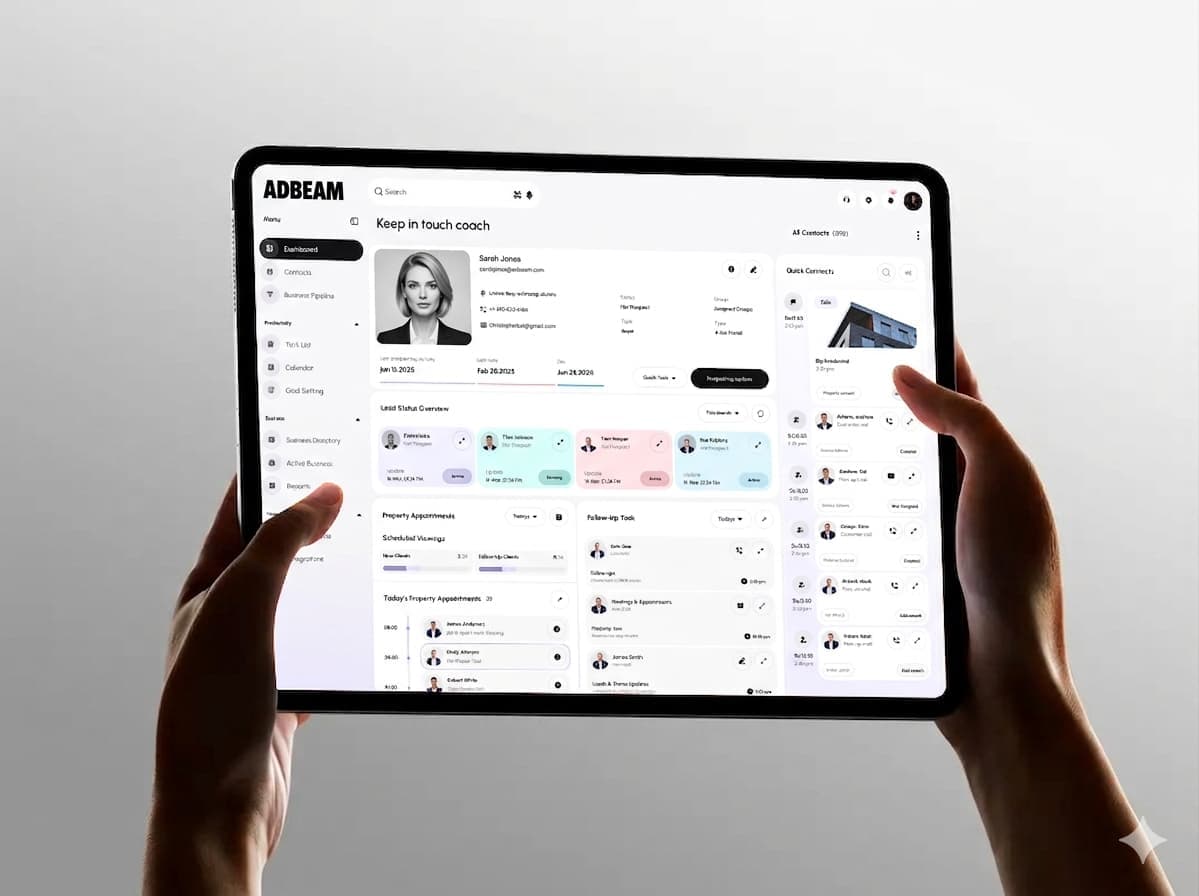
We designed and built a fully custom KPI dashboard that aggregates data from CRM, ad platforms, sales tracking, and web analytics into a single, real-time interface.
Every metric was tailored to actual business goals — not generic vanity numbers. Leads by channel, conversion rates by funnel stage, revenue per campaign, cost per acquisition. Filters let teams drill down by date range, channel, or region. Automatic data syncs ensure the numbers are always current.
The Results
Numbers that speak for themselves.
100%
data visibility
all key metrics in one place
4h
saved per week
no more manual reporting
3×
faster decisions
real-time data instead of stale slides
$0
recurring BI license costs
no per-seat fees, full ownership
How It Works
Four steps. From chaos to clarity.
Connect
Data sources are connected via APIs — CRM, Google Ads, Analytics, spreadsheets. Once set up, syncs run automatically on a schedule. No manual exports.
Transform
Raw data is cleaned, normalized, and mapped to business-relevant KPIs. Duplicates are removed, formats standardized, and metrics calculated in real time.
Visualize
A clean, role-based dashboard surfaces the metrics that matter. Filter by date, channel, team, or campaign. Every chart is designed for instant comprehension, not decoration.
Act
Automated alerts flag anomalies — a sudden drop in conversion rate, a spike in ad spend, a channel underperforming. The team acts on data, not hunches.
What the Dashboard Does
Built for decisions. Not for dashboards nobody opens.
Real-Time Data Aggregation
All data sources feed into a single pipeline. CRM, ad platforms, analytics, and sales tools — unified and always up to date. No more copy-pasting between tabs.
Custom KPI Definitions
Every metric is defined around actual business goals. Cost per qualified lead, revenue per channel, funnel stage conversion — not generic pageviews or bounce rates.
Role-Based Views
The CEO sees the overview. The marketing lead sees campaign performance. The sales team sees pipeline health. Same data, different lenses.
Smart Alerts
Threshold-based notifications catch problems early. If cost per lead exceeds a target or conversion drops below a threshold, the right person knows immediately.
Flexible Filtering
Drill down by date range, channel, campaign, region, or team. Slice the data the way your questions demand — not the way a vendor decided.
Export & Reporting
One-click CSV export for deeper analysis. Automated weekly email digests. Scheduled PDF reports for stakeholders who prefer inbox over dashboards.
Technology
Clean architecture. No vendor lock-in.
The dashboard is built on a modern stack: React and Next.js for the frontend, Node.js for the data aggregation layer, and PostgreSQL for persistent storage. API integrations handle data syncing from all connected platforms.
The architecture is modular — adding a new data source means writing one adapter, not rebuilding the system. Hosted on cloud infrastructure with no exotic dependencies and no vendor lock-in.